


Most infrastructure is built for continuity, not disruption.
Quantum introduces a form of disruption that doesn’t announce itself clearly.
It simply shifts what’s possible.

Most infrastructure is built for continuity, not disruption.
Quantum introduces a form of disruption that doesn’t announce itself clearly.
It simply shifts what’s possible.
The hardest part about emerging risks is timing.
Too early and they’re ignored.
Too late and they’re already reality.
Systems aren’t judged by how they perform under normal conditions.
They’re judged by how they hold up when conditions change.
That’s where most designs get exposed.
How to get free lifetime access to QVPN
We're giving away free lifetime access through QVPN Genesis launch.
Spots are limited, so here's how to grab yours:
1. Open the QVPN Telegram Mini App: https://t.me/qvpn_app_bot?start=gen-2Q6iuUAu
2. Tap start to launch the bot
3. Your Genesis spot is claimed automatically
4. Lifetime access unlocked - that's it
What Genesis members get:
1. Free lifetime access to QVPN
2. $SHHH token mining inside the Mini App
3. Early access to new features
4. Founding member status
5. Priority support
Spots are first come, first served. Don't miss out.
Never pay for a VPN again. Earn $SHHH daily, claim free premium QVPN forever.

Every delay in security design has a cost. It just isn’t visible immediately.
In fast-moving systems, it’s easy to postpone hard upgrades.
Security improvements get scheduled “later.”
Architectural changes get pushed to “future versions.”
But those delays don’t disappear; they accumulate.
Eventually, the gap between current systems and required resilience becomes too large to close without disruption.
Quantum computing accelerates that timeline dramatically.
Diamante was built without relying on deferred security decisions. The architecture starts where others eventually need to migrate toward.
The result is a system that doesn’t carry hidden technical debt into the future.
The most expensive problems in infrastructure are rarely technical, they’re the ones that were postponed too long to fix cleanly.
Will your chain survive the threats of tomorrow?
What if your VPN paid you back?
QVPN does. Genesis Access is now live - early access to QVPN, the world’s first quantum-safe VPN.
Most VPNs just hide your traffic. QVPN does more. It keeps you safe with encryption strong enough to beat even quantum computers - and it pays you for using it.
Genesis is the first group to join. Only 5000 people worldwide. And they get the most:
- 4x more daily mining rewards
- 2x daily earning limit
- Bigger weekly & monthly payouts
- Unlimited referrals
- Longer referral reward time
- Free premium QVPN at launch
- Extra rewards when the VPN goes live
These perks are not a one-time thing. Genesis members keep this edge forever.
Only 5000 spots will ever exist. Once they're gone, they're gone.
Join early. Stay safe. Earn more.
👉 Claim your Genesis spot:https://t.me/qvpn_app_bot?start=gen-2Q6iuUAu
Never pay for a VPN again. Earn $SHHH daily, claim free premium QVPN forever.

Quantum doesn’t introduce new threats in the traditional sense.
It changes the feasibility of old ones.
That distinction is where the real impact sits.
SpaceX didn't change the world because rockets were new.
It changed the world because it made progress happen faster.
AI is doing the same thing.
The question isn't whether quantum computing becomes a reality.
The question is what happens if AI cuts years off the timeline.
Most of the industry's security assumptions were built on having more time.
We’ve built decades of digital security on computational limits.
Quantum challenges those limits directly.
That changes the baseline, not just the edge cases.
The AI race is obvious.
The quantum race is quieter.
But increasingly, they're becoming the same conversation.
AI is helping optimize complex systems, accelerate research, and solve problems that previously took years.
Quantum computing stands to benefit from all of it.
The question isn't whether AI changes the future.
The question is how many other technologies it pulls forward with it.
Most security models are built on what computers can’t do today.
Quantum shifts that boundary.
And when the boundary moves, so does everything relying on it.
Quantum doesn’t need to break systems to matter.
It only needs to change what “secure” means.
Everything built on old assumptions gets re-evaluated instantly.
If AI can help identify exploits today, imagine what the next decade of computational advancement looks like.
The industry keeps treating quantum security as a future problem.
Meanwhile the capabilities being handed to attackers continue to improve.
Post-quantum infrastructure isn't about preparing for one breakthrough.
It's about preparing for a world where breakthroughs happen faster than expected.
https://x.com/i/status/2062658415537618958
one of the most popular cryptocurrencies (zcash) was just exploited by Opus 4.8
the discussion around moving BTC to post quantum rails needs to happen yesterday
X
The future of blockchain won’t run on one environment.
Different industries require different systems.
Different developers require different tools.
Different applications require different execution models.
That’s why isolated ecosystems eventually hit limits.
Diamante approaches this differently through multi-VM execution on one settlement layer, allowing native apps, enterprise logic, and EVM-compatible applications to coexist without rebuilding from scratch.
Because the future isn’t about forcing everyone into one standard.
It’s about making systems work together seamlessly.
Time is the real stress test for every system.
Will your chain survive the threats of tomorrow?
The next generation of blockchain infrastructure won’t choose between privacy and openness. It will combine both.
Public systems unlock liquidity and composability.
Private systems unlock enterprise adoption and controlled workflows.
For years, the industry treated these as opposites.
But real-world infrastructure doesn’t operate in extremes.
Businesses need privacy for sensitive operations while still accessing public settlement and interoperability.
Diamante was designed for that future.
A true hybrid Layer 1 where public and private environments coexist on the same network.
Because the future won’t belong to isolated systems.
It will belong to unified ones.
The gap between “safe” and “exposed” is shrinking.
Be prepared for tomorrow.
Diamante already is.
The hardest part about quantum isn’t the technology. It’s human nature.
People ignore slow-moving risks.
Especially when systems still appear functional.
That’s why industries wait too long to adapt. Not because the threat isn’t real, but because it doesn’t feel immediate enough.
Quantum computing falls into that exact category.
It’s easier to postpone preparation than rethink infrastructure.
But history shows the same pattern repeatedly:
The systems that prepare early become the standard.
The ones that wait are forced into reaction.
Diamante chose preparation.
Because by the time a risk feels urgent, the advantage is already gone.
Quantum doesn’t need permission to matter.
It just needs time.
In crypto, ownership has always meant one thing: whoever controls the keys controls the assets.
Quantum computing challenges that entirely.
Because if future systems can derive or compromise keys from historical exposure, ownership stops being permanent. It becomes conditional on whether the underlying cryptography survives technological progress.
That’s the real conversation the industry still avoids.
Not whether blockchains work today, but whether digital ownership still holds decades from now.
Diamante was built around that reality from day one.
Post-quantum security isn’t an upgrade path. It’s the foundation itself.
Because the future of blockchain isn’t just decentralization.
It’s making ownership durable enough to survive the future.
AI is dramatically accelerating the quantum race.
And that changes the timeline for crypto security entirely.
Researchers and security experts are now warning that AI is helping solve some of quantum computing’s biggest bottlenecks, from error correction to system optimization.
What once felt decades away is starting to compress into years.
At the same time, governments and sophisticated actors are already collecting encrypted data today under a “harvest now, decrypt later” strategy.
Not to read it now. To unlock it later.
That matters for blockchain more than most people realize.
Bitcoin, Ethereum, and most major chains still rely on classical cryptography models that were never designed for a quantum era. Even Google recently estimated that breaking modern elliptic curve cryptography may require far fewer logical qubits than previously expected.
This is no longer just a theoretical discussion.
The industry is already reacting:
The shift has already started.
Diamante was built for this reality from the beginning, post-quantum security integrated at the protocol level, not added later as an emergency migration path.
The next era of blockchain won’t just be defined by scalability or adoption.
It will be defined by which systems were built early enough to survive what’s coming.
Most systems are built to react. Very few are built to prepare.
Reaction means waiting for the problem.
Preparation means building before it arrives.
Blockchain, until now, has largely been reactive.
Scaling issues? Fix them later.
Security gaps? Patch them later.
Quantum changes that model.
Because some problems can’t be fixed after the fact.
Diamante is built on preparation.
A foundation designed for what’s coming, not just what exists.
Because the next era won’t reward reaction.
It will reward readiness.
Quantum doesn’t target you directly.
It targets the system you rely on.
Quantum isn’t pressure.
It’s a turning point.

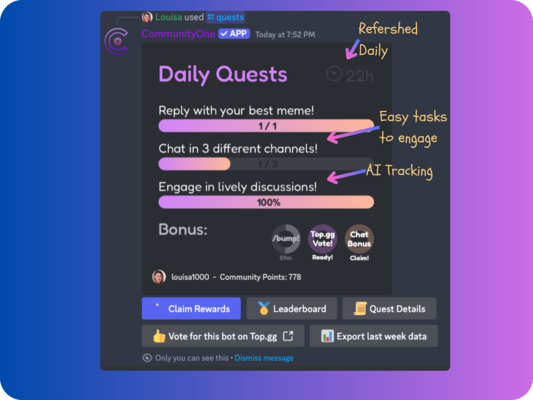
Daily smart quests: 4x messages & free AAA games
Be the first to know when Spark Tickets launches
Be the first to know when Spark with Tickets launches
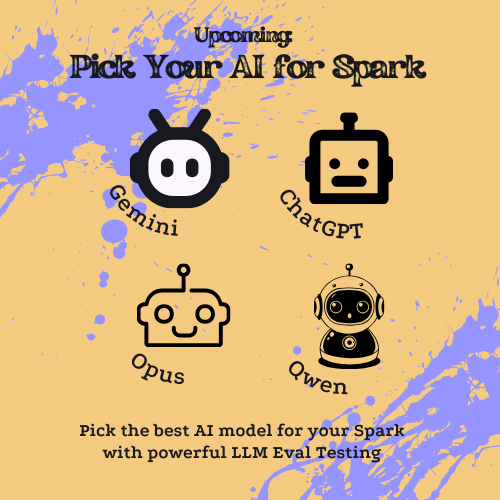
Be the first to know when Community Monetization launches
Be the first to know when X Integration launches


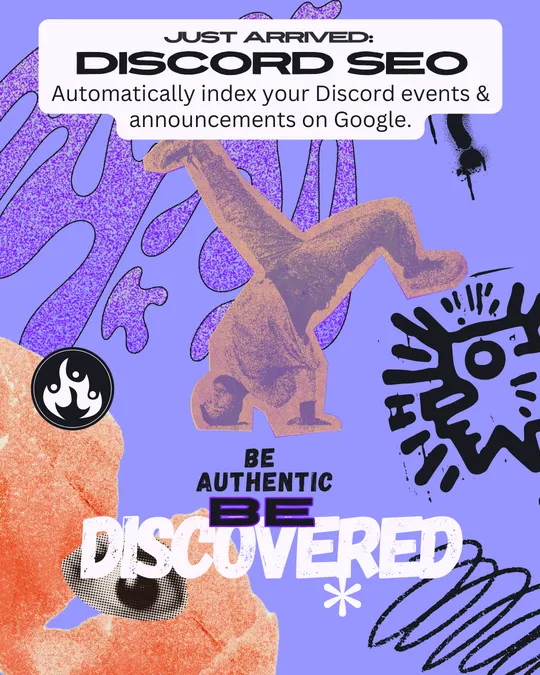
With your permission, make your Discord community discoverable on Google. Automatically index your events and announcements for better visibility.



External Link
Platform
You are about to visit:
https://example.comThis will open in a new tab. Make sure you trust this link.