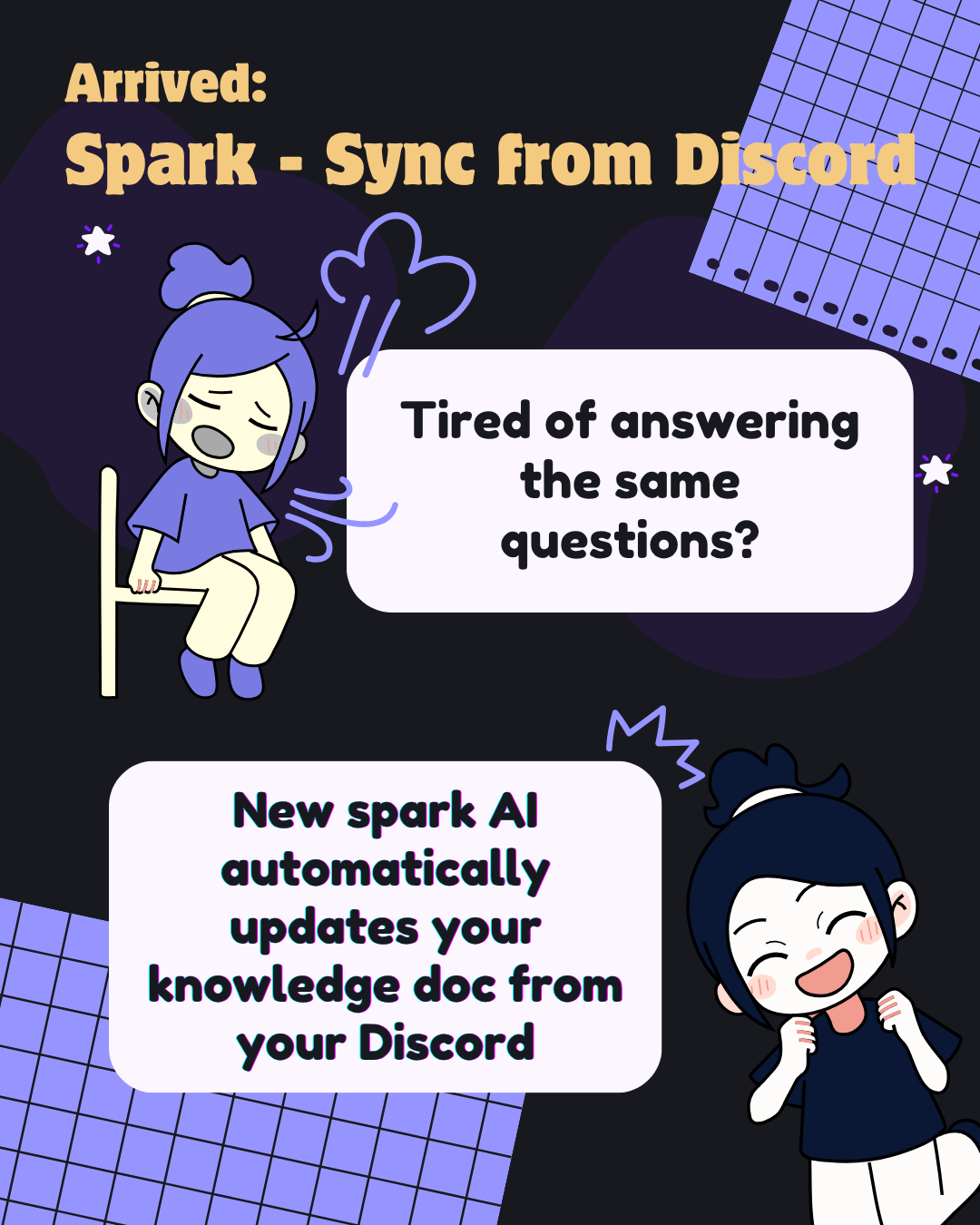
Spark is a Discord support AI bot built to keep community knowledge up to date and to answer member questions automatically. The 2025 Spark update focuses on making testing easier, improving how you add knowledge, and expanding how Spark can operate across channels.
If you’re planning to roll out Spark this year, the key is to validate it quickly in your server, connect the right knowledge sources, and confirm your multi-agent setup behaves the way you want.
What Spark AI does for Discord communities
Spark is designed to help Discord communities by:
- Updating community knowledge and using that knowledge to answer member questions automatically
- Providing instant support even when staff aren’t online
- Reducing repetitive moderator work by handling common questions
- Supporting both smaller projects (helping members get quick responses without constant staff presence) and larger projects (reducing repeated questions moderators must answer)
Why the 2025 Spark update matters
The 2025 Spark update improves the Spark Chat experience and the underlying behavior you rely on for support.
According to the update overview, the changes help you:
- Test Spark quickly by introducing the bot and tagging it in your community
- Configure community knowledge so responses are grounded in what your server expects
- Use a multi-agent setup across multiple channels, instead of being limited to one channel at a time
- Benefit from backend upgrades that improve search, model behavior, and conversation context
How to test Spark (bot tagging checklist)
To get a feel for how Spark works in your community, the transcript summary highlights a straightforward testing approach.
Step 1: Introduce Spark into your Discord community
Start by bringing the Spark bot into your server.
Step 2: Tag the bot to confirm it responds
Once the bot is present, tag the bot to verify that Spark is working in your environment. This is the simplest way to “get a feeling” for Spark’s behavior during testing.
Add community knowledge for better answers
Spark’s value depends on the knowledge you provide. In the 2025 update, you configure Spark Chat by adding community knowledge sources.
Connect supported Gbook integrations
The update supports connecting supported Gbook integrations. Adding these sources helps Spark base answers on the knowledge you already maintain.
Upload manual text-file knowledge
The transcript summary also includes the ability to upload manual text files. The examples named in the summary include material from:
- GitHub
- Technical documentation
Adding text-file content gives Spark more context so responses can reflect what’s relevant for your community.
Multi-agent setup across multiple channels
A major change in the 2025 Spark update is expanded support for multiple AI agents working across multiple channels.
What changed versus the earlier approach
The earlier version limited you to one channel at a time. With the 2025 update, you can create separate agents and use them across multiple channels.
How to think about different agent roles
The transcript summary describes using different agents for different roles, such as:
- A welcome or jokes agent
- A technical setup agent
- A customized testing agent
This gives you a clearer way to structure support and responses by channel purpose.
Backend upgrades in the 2025 update
Beyond setup changes, the update includes backend improvements that affect how Spark finds information and how it carries context during conversations.
Improved search via smaller document chunking
The 2025 update includes improved search behavior using smaller document chunking. In practice, this is intended to strengthen how Spark locates relevant parts of your knowledge sources.
Model migration from OpenAI to Gemini
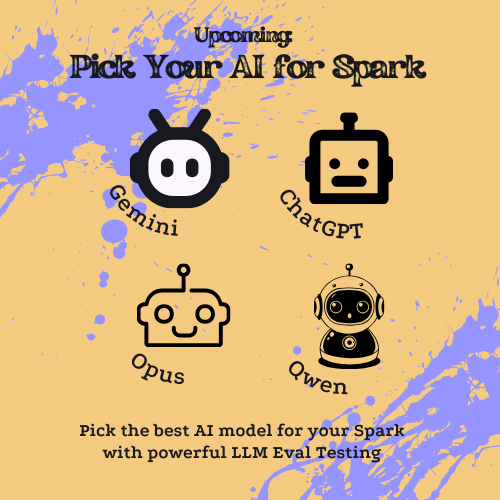
The transcript summary notes a model migration from OpenAI to Gemini. This aligns with the team’s goal of matching their speaking style.
Longer context for more personal conversations
The update also includes longer context, which is described as enabling more personal conversations.
Spark testing and rollout checklist (step-by-step)
Use the steps below to validate the 2025 Spark update in a reliable order:
- Introduce Spark into your Discord community.
- Tag the bot to confirm Spark responds as expected.
- Configure Spark Chat by adding community knowledge.
- Add supported Gbook integrations.
- Upload any needed manual text files (including content from sources like GitHub or technical documentation).
- Set up multiple AI agents across multiple channels, assigning roles appropriate to each channel.
- Verify behavior that may reflect backend improvements, such as improved search from document chunking and more context-aware responses.
Conclusion
The 2025 Spark update expands how Spark AI support can be tested and configured in Discord. Start by introducing the bot and tagging it, then configure Spark Chat with the right knowledge sources using Gbook integrations and manual text-file uploads. Finally, take advantage of the multi-agent setup across multiple channels, and review the backend upgrades—improved search chunking, a migration from OpenAI to Gemini, and longer context—to understand what may change in Spark’s responses.