Hollow Point Trading
Hollow Point Trading Discord server banner

Hollow Point Trading Updates & Events

Server Updates & Events

Announcements

Bond Claim Priority Doesn't Guarantee Full Recovery

https://youtu.be/Dmbg0jvdNO0

A bond claim is not guaranteed full recovery #Shorts


A higher priority bond claim is not a guarantee of full recovery. Imagine a simplified default where sixty million dollars remains for one class of equal ranking bond claims totaling one hundred million dollars. If that entire amount is distributed proportionally to that class, the recovery is sixty cents per dollar. Real bankruptcy outcomes dep...

Bond Claim Priority Doesn't Guarantee Full Recovery

How Floating Bond Coupons Reset Over Time

https://youtu.be/B7T4Pumh87g

A floating coupon resets on its own schedule #Shorts


A floating coupon does not necessarily change every time market rates move. Imagine a hypothetical bond pays a reference rate plus two percentage points. At its reset date, the reference rate is three percent, making the annual coupon rate five percent. On one thousand dollars of principal, that rate corresponds to fifty dollars of annual intere...

How Floating Bond Coupons Reset Over Time

Why Operating Profit Can Rise as Net Profit Falls

https://youtu.be/WZVU5h-K0yI

Operating profit can rise while net profit falls #Shorts


Operating profit can rise while net profit falls. Imagine a simplified business earns ten million dollars of operating profit, pays two million of interest expense, and records two million of income tax expense. Net income is six million dollars. Next year, operating profit rises to twelve million dollars, but interest expense rises to five mill...

Why Operating Profit Can Rise as Net Profit Falls

Why Collecting an Old Invoice Isn’t New Revenue

https://youtu.be/U060dzD6LEk

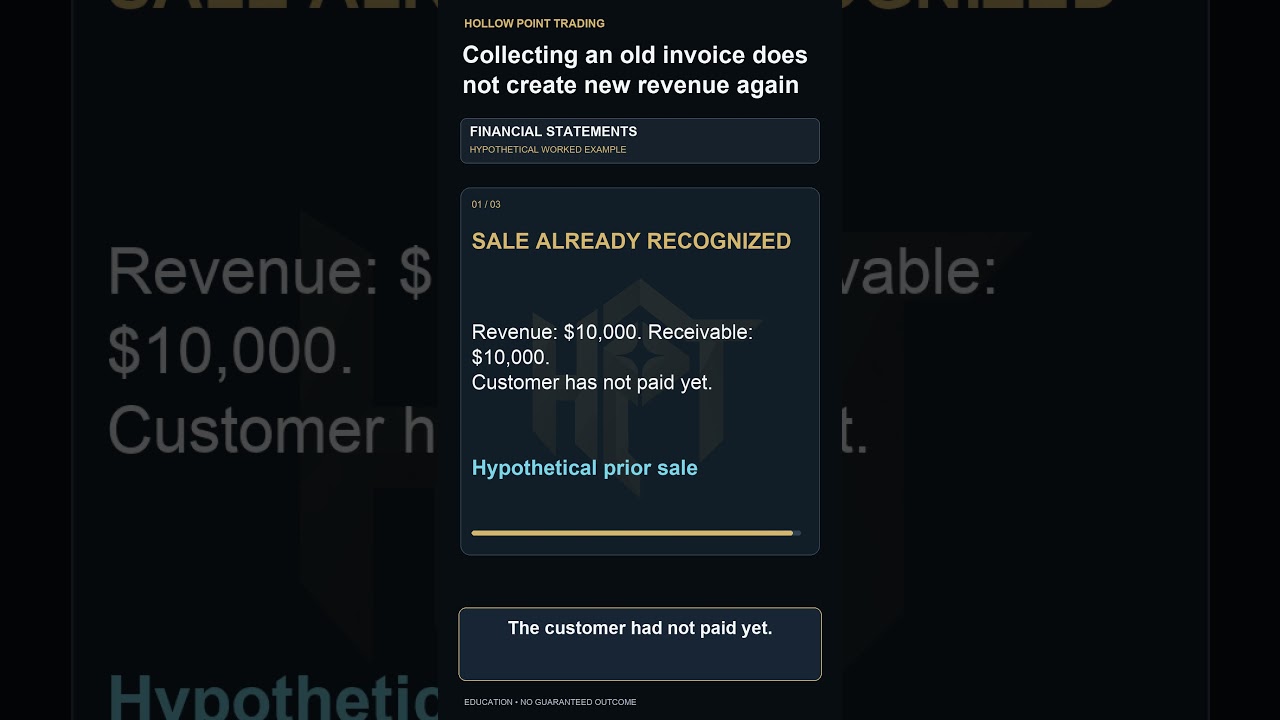
Collecting an old invoice does not create new revenue again #Shorts


Collecting an old invoice does not create the same sale twice. Imagine a business already recognized ten thousand dollars of revenue and a matching customer receivable when the sale qualified for recognition. The customer had not paid yet. When the customer later pays ten thousand dollars, cash rises and the receivable falls by the same amount. ...

Why Collecting an Old Invoice Isn’t New Revenue

Book Equity vs. Market Value: What Investors Should Know

https://youtu.be/JMUHSokmMi8

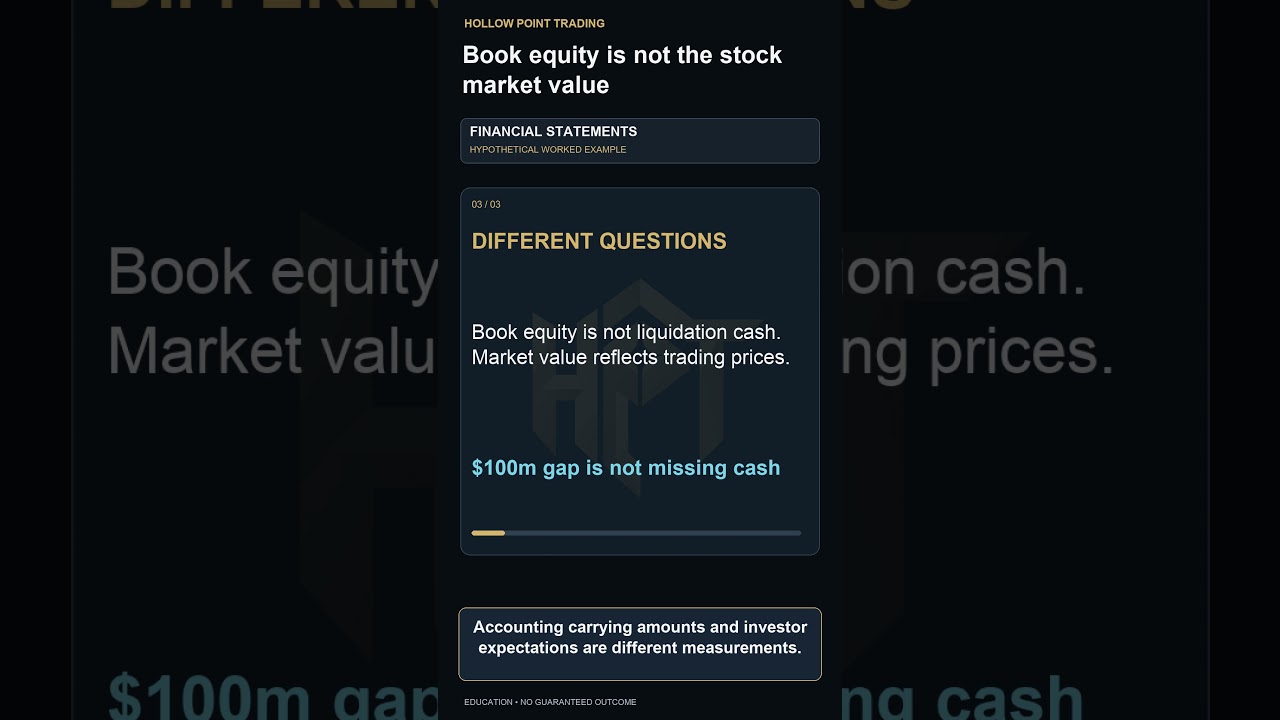
Book equity is not the stock market value #Shorts


Book equity and stock market value answer different questions. Imagine a hypothetical balance sheet reports five hundred million dollars of assets and three hundred million dollars of liabilities. The residual book equity is two hundred million dollars. If ten million shares trade at thirty dollars each, the equity market value is three hundred ...

Book Equity vs. Market Value: What Investors Should Know

Trailing vs. Forward P/E: Two Ratios, One Stock

https://youtu.be/lcO51UixWas

Two price earnings ratios can describe the same stock #Shorts


Two price earnings ratios can describe the same stock if the earnings inputs differ. Imagine a share price of sixty dollars and earnings per share of three dollars over the last twelve months. The trailing ratio is twenty. Now suppose an analyst forecasts four dollars of earnings per share for the next year. Dividing the same sixty dollar price ...

Trailing vs. Forward P/E: Two Ratios, One Stock

How Fuel Price Hikes Affect Airline Profits

https://youtu.be/tt36yBynFYI

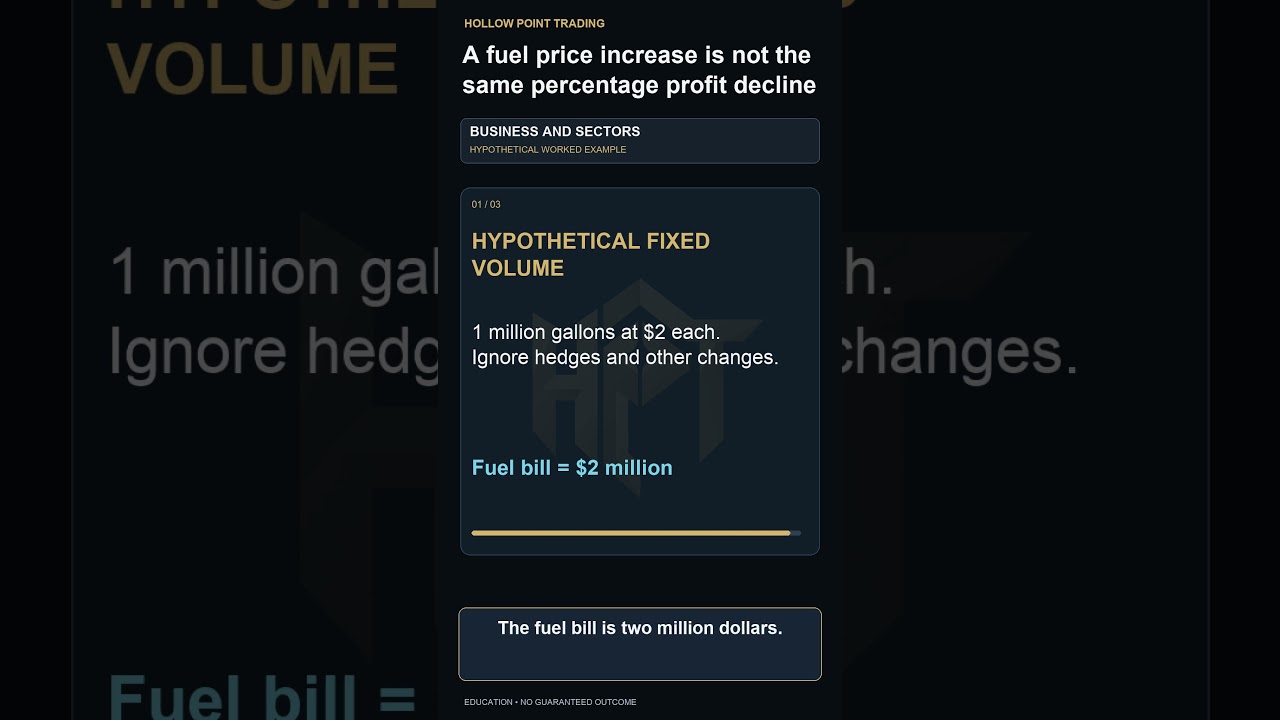
A fuel price increase is not the same percentage profit decline #Sh...


A fuel price increase does not translate into the same percentage change in airline profit. Imagine a hypothetical airline buys one million gallons at two dollars per gallon. The fuel bill is two million dollars. If the price rises to two dollars fifty and the gallons stay unchanged, the bill becomes two point five million dollars. That is five ...

How Fuel Price Hikes Affect Airline Profits

GOOGL Red Candle: What Trading Volume Really Means

https://youtu.be/YLq8v9hoV8M

GOOGL: a red candle does not mean net sellers #Shorts


A red candle does not mean every share was sold without a buyer. This historical Alphabet IEX interval opens at three fifty two point six one five and closes at three fifty one point three seven. Its reported volume totals six thousand eight hundred ninety five shares. The lower close makes the candle red. The volume measures shares traded, not ...

GOOGL Red Candle: What Trading Volume Really Means

DE Volume Averages: Why Two Figures Can Both Be Right

https://youtu.be/aoGU9xlzQgk

DE: two volume averages can both be right #Shorts


Two different volume averages can both be correct if their denominators differ. This historical Deere IEX extract covers the five minute window starting at fifteen ten UTC. Only two minute rows are reported in that window. Those rows contain three hundred fifty six and forty five shares, for four hundred one observed shares. Divide by two report...

DE Volume Averages: Why Two Figures Can Both Be Right

JNJ Trading Range: Convert Dollars to Percent

https://youtu.be/SQmY5kOz8Bw

JNJ: turn a dollar range into a percentage #Shorts


A dollar range needs a reference price before you can compare it as a percentage. This historical Johnson and Johnson IEX interval begins at fifteen ten UTC on October eighth, twenty twenty six. Its first observed open is two fifty two point seven five five. The interval high is two fifty three point zero eight. Its low is two fifty two point se...

JNJ Trading Range: Convert Dollars to Percent

AMZN 5-Minute Candle: Did the High or Low Come First?

https://youtu.be/NtCCfKKOsvU

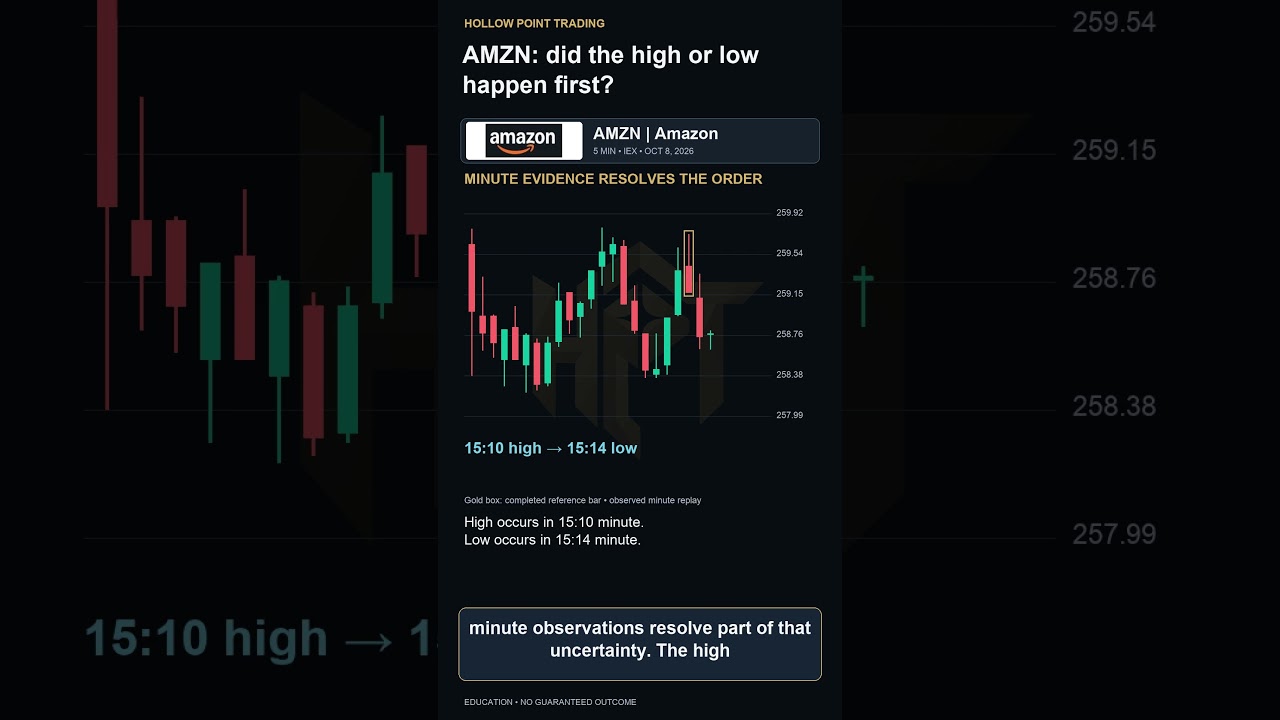
AMZN: did the high or low happen first? #Shorts


A five minute candle shows a high and low, but not which happened first. In this historical Amazon IEX example, the highlighted interval has a high of two fifty nine point seven three and a low of two fifty nine point one seven. The underlying minute observations resolve part of that uncertainty. The high appears in the fifteen ten UTC minute. T...

AMZN 5-Minute Candle: Did the High or Low Come First?

BAC Trading Volume: Shares Aren’t Investor Counts

https://youtu.be/h1O9PBQsFrM

BAC: shares traded are not investor counts #Shorts


Forty three thousand shares does not mean forty three thousand investors. This historical Bank of America example uses IEX observations from October eighth, twenty twenty six. The highlighted five minute interval begins at fifteen ten UTC. Add the five reported minute volumes: forty three thousand one hundred forty shares. Add their trade counts...

BAC Trading Volume: Shares Aren’t Investor Counts

COST Stock Candles: Why Start Time Isn’t Close Time

https://youtu.be/128LTEEgd88

COST: a start timestamp does not reveal the future close #Shorts


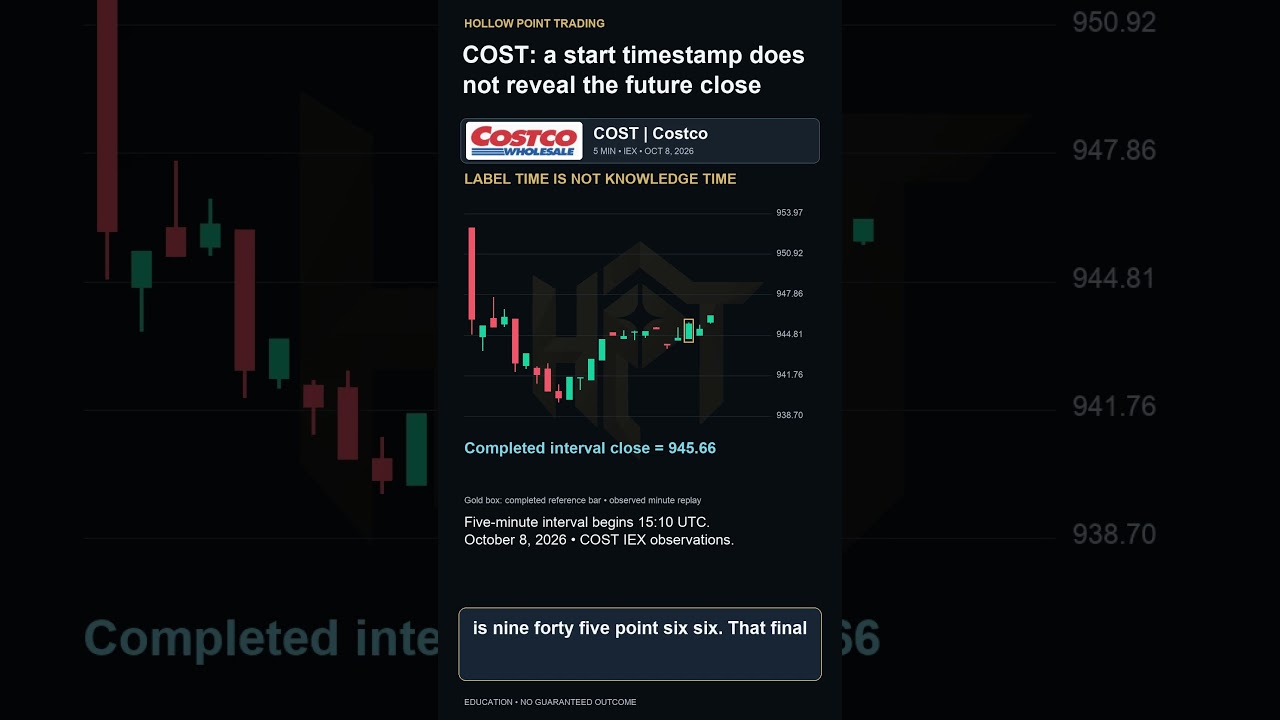
A candle timestamp can mark its beginning, not the moment its final close was known. This Costco example groups historical IEX observations into the five minute interval starting at fifteen ten UTC. Its final observed close is nine forty five point six six. That final close comes from the fifteen fourteen minute observation. It was not informati...

COST Stock Candles: Why Start Time Isn’t Close Time

XOM VWAP: Combine Minute Values by Volume

https://youtu.be/npL-NFx4_18

XOM: combine VWAP with volume weights #Shorts


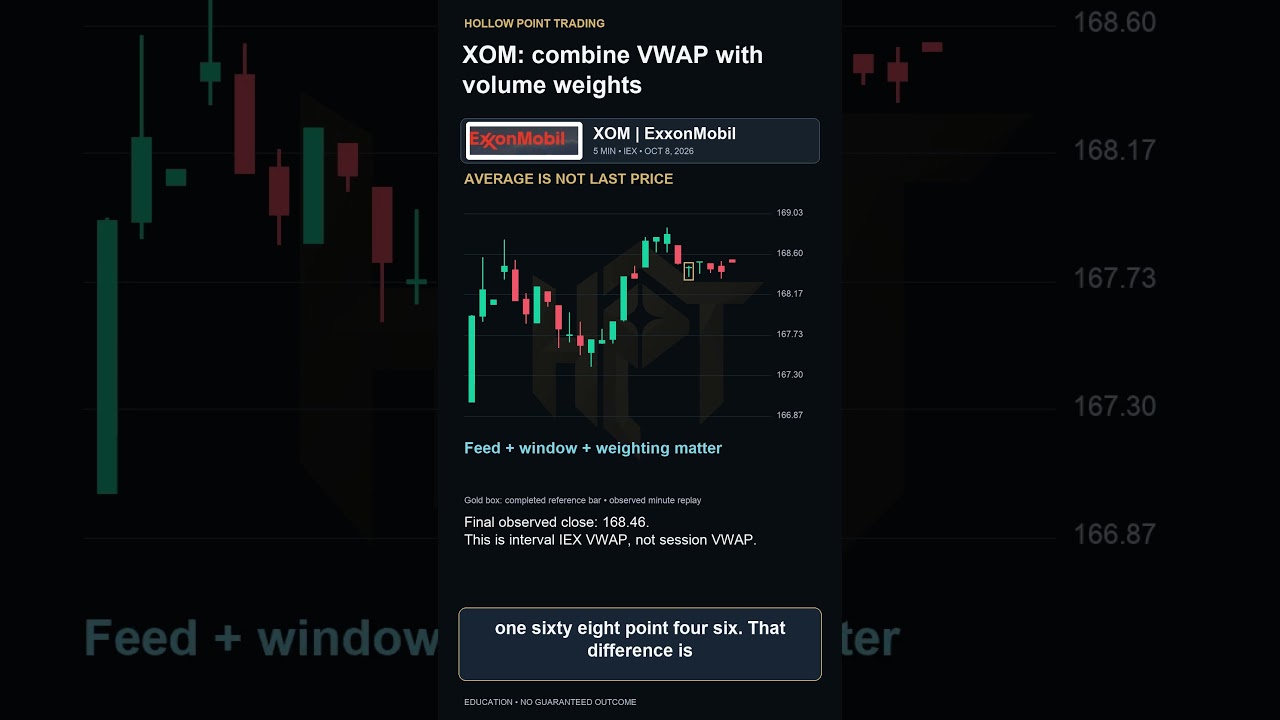
You cannot combine minute VWAP values by blindly averaging them. This historical ExxonMobil IEX window contains four observed minute bars. Their volumes are seven forty four, three fifty six, six forty nine, and two fifty six shares. The total is two thousand five shares. Multiply each reported minute VWAP by its own volume, add those products, ...

XOM VWAP: Combine Minute Values by Volume

AMD Missing Minute: Why No Row Isn’t a Flat Candle

https://youtu.be/2OsHN5_CnWg

AMD: a missing minute is not a flat candle #Shorts


A missing data row is not evidence that a stock stopped trading. This historical AMD IEX extract has observations stamped fifteen ten, fifteen eleven, fifteen thirteen, and fifteen fourteen UTC. There is no fifteen twelve row in this five minute window. That gives four observed minute bars, not five. It does not establish zero trading across eve...

AMD Missing Minute: Why No Row Isn’t a Flat Candle

JPM True Range: Why It Exceeds Candle Range

https://youtu.be/puxkwCXlsKA

JPM: why true range exceeds the candle range #Shorts


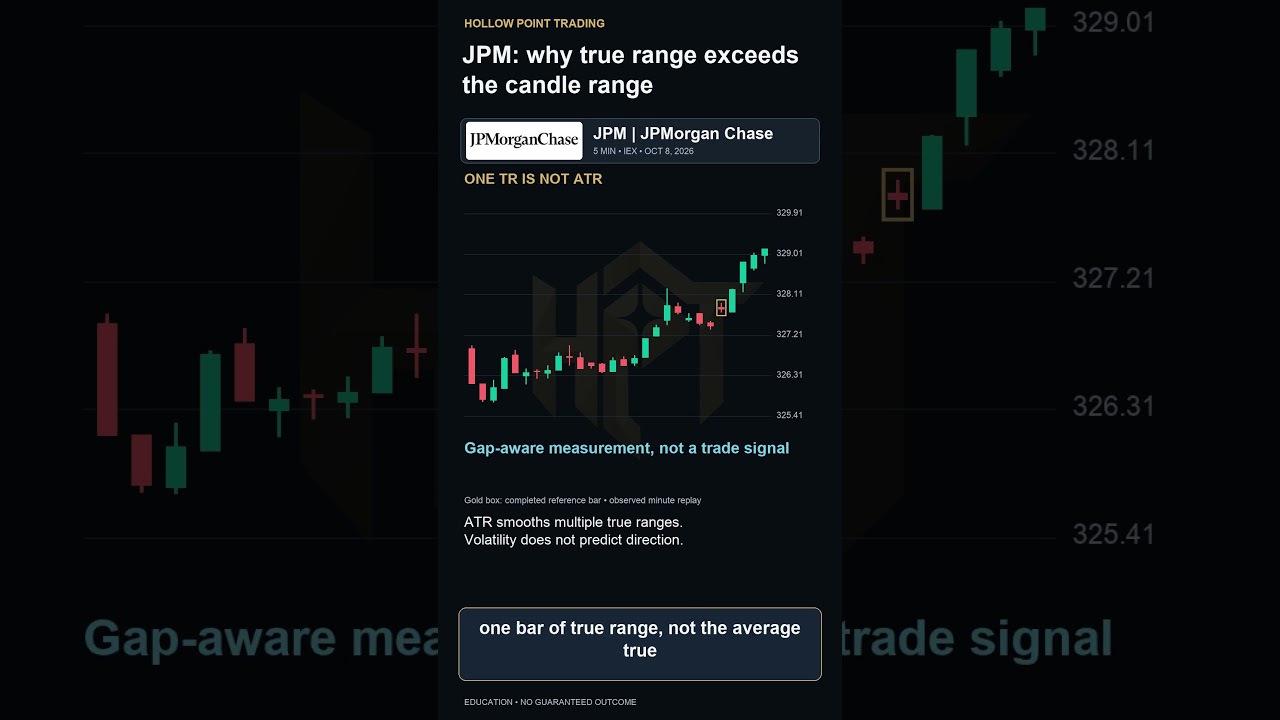
A small candle range can miss a gap from the previous close. In this historical JPMorgan IEX example, the highlighted five minute bar has a high of three twenty seven point nine two and a low of three twenty seven point seven two. Its high minus low is twenty cents. But the previous bar closed at three twenty seven point four one. The distance f...

JPM True Range: Why It Exceeds Candle Range

MSFT: Why a Five-Minute Close Isn’t an Average

https://youtu.be/HcU5U3zDHXE

MSFT: a five-minute close is not an average #Shorts


A five minute candle close is not the average of five closes. This Microsoft example uses historical IEX observations from October eighth, twenty twenty six. The highlighted interval begins at fifteen ten UTC. It contains five one minute bars. The first open is five thirty point nine zero. The highest high is also five thirty point nine zero. Th...

MSFT: Why a Five-Minute Close Isn’t an Average

How Borrowing Boosts Cash Without Increasing Sales

https://youtu.be/_uf-yGgl7SA

Borrowing can increase cash without creating sales #Shorts


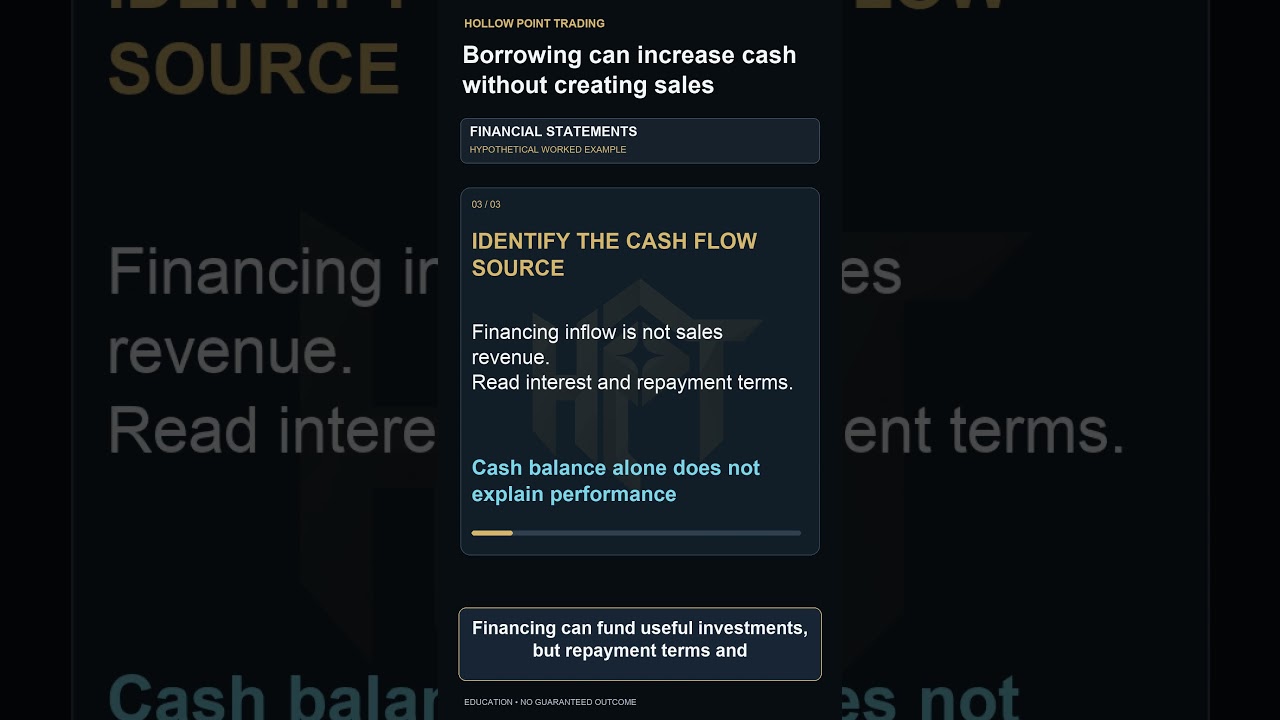
A rising cash balance does not necessarily mean customers bought more. Imagine a business starts with twenty thousand dollars in cash and borrows eighty thousand dollars. Ignore fees and all other activity in this simplified example. Cash rises to one hundred thousand dollars, but debt also rises by eighty thousand. The loan proceeds are a finan...

How Borrowing Boosts Cash Without Increasing Sales

Why the Current Ratio Can Hide Cash Shortages

https://youtu.be/bfMaNzPRlm8

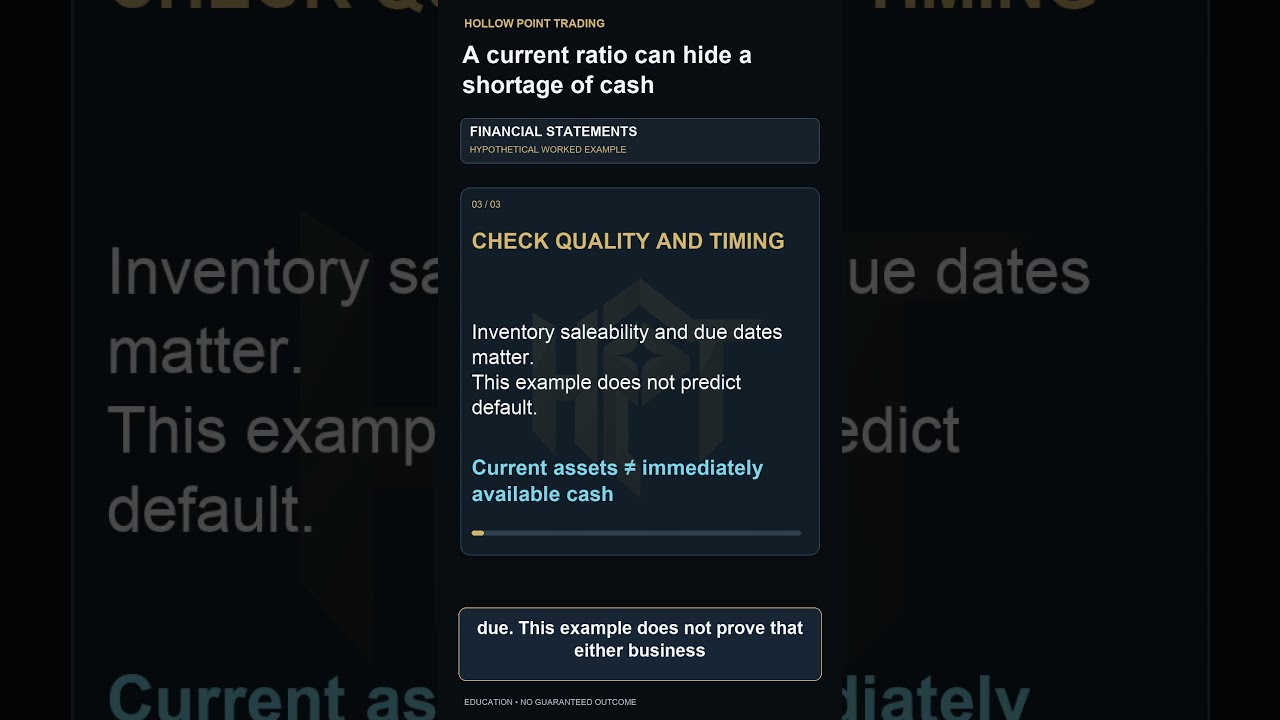
A current ratio can hide a shortage of cash #Shorts


Two businesses can show the same current ratio and very different cash situations. Imagine each has two hundred thousand dollars of current assets and one hundred thousand dollars of current liabilities. Both current ratios equal two. In the first business, one hundred eighty thousand dollars of those assets is cash. In the second, only twenty t...

Why the Current Ratio Can Hide Cash Shortages

Depreciation Explained: Spreading Equipment Costs

https://youtu.be/-o3Sy8_W5xs

Depreciation spreads a cost without repeating the cash purchase #Sh...


Depreciation is not another cash purchase every year. Imagine a business pays fifty thousand dollars in cash for equipment. Assume a five year useful life, no residual value, and straight line depreciation for this simplified example. The annual depreciation expense is ten thousand dollars. The original fifty thousand dollar payment and the annu...

Depreciation Explained: Spreading Equipment Costs

Accrued Interest: Earned Before Cash Arrives

https://youtu.be/rcI2BSfIYYg

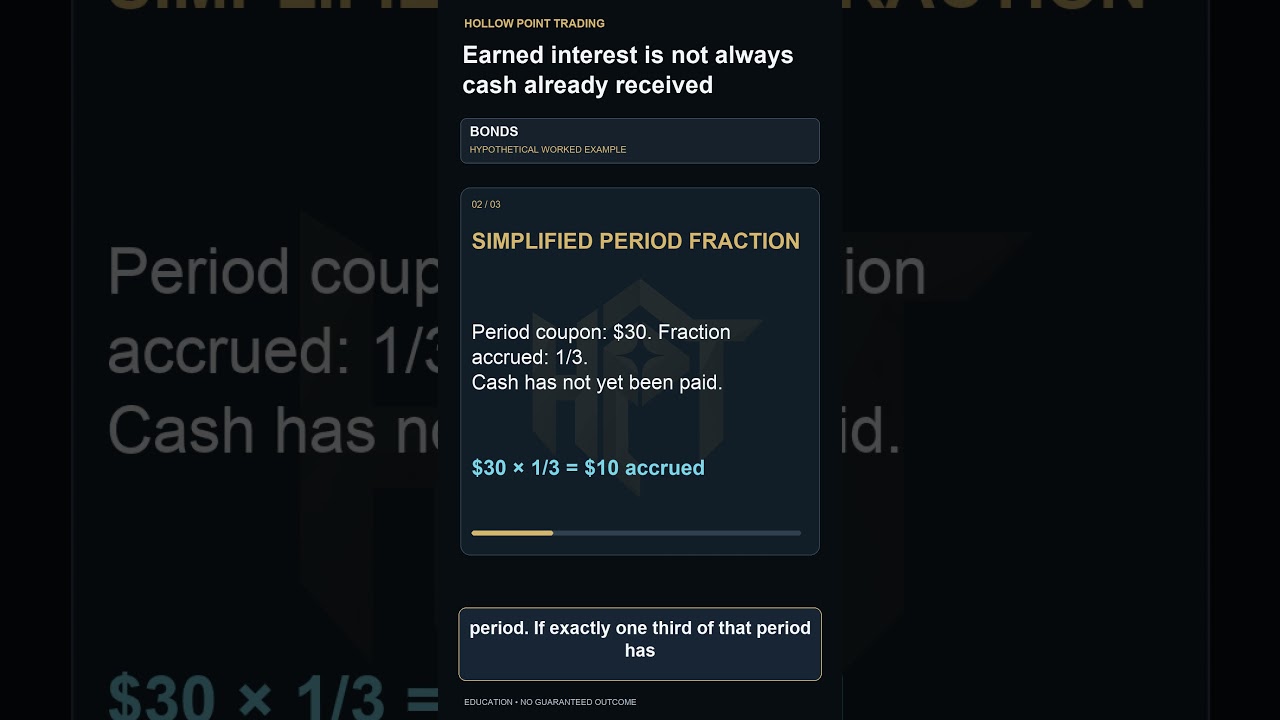
Earned interest is not always cash already received #Shorts


Interest can be earned before cash arrives. Accrued interest means interest earned on a security but not yet paid to the investor. That distinction matters when a bond pays coupons only on specified dates. Imagine a bond promises a thirty dollar coupon for a coupon period. If exactly one third of that period has accrued under its applicable conv...

Accrued Interest: Earned Before Cash Arrives

How a 10% Stock Drop Can Cut Equity by More

https://youtu.be/mk8F_ZFejA4

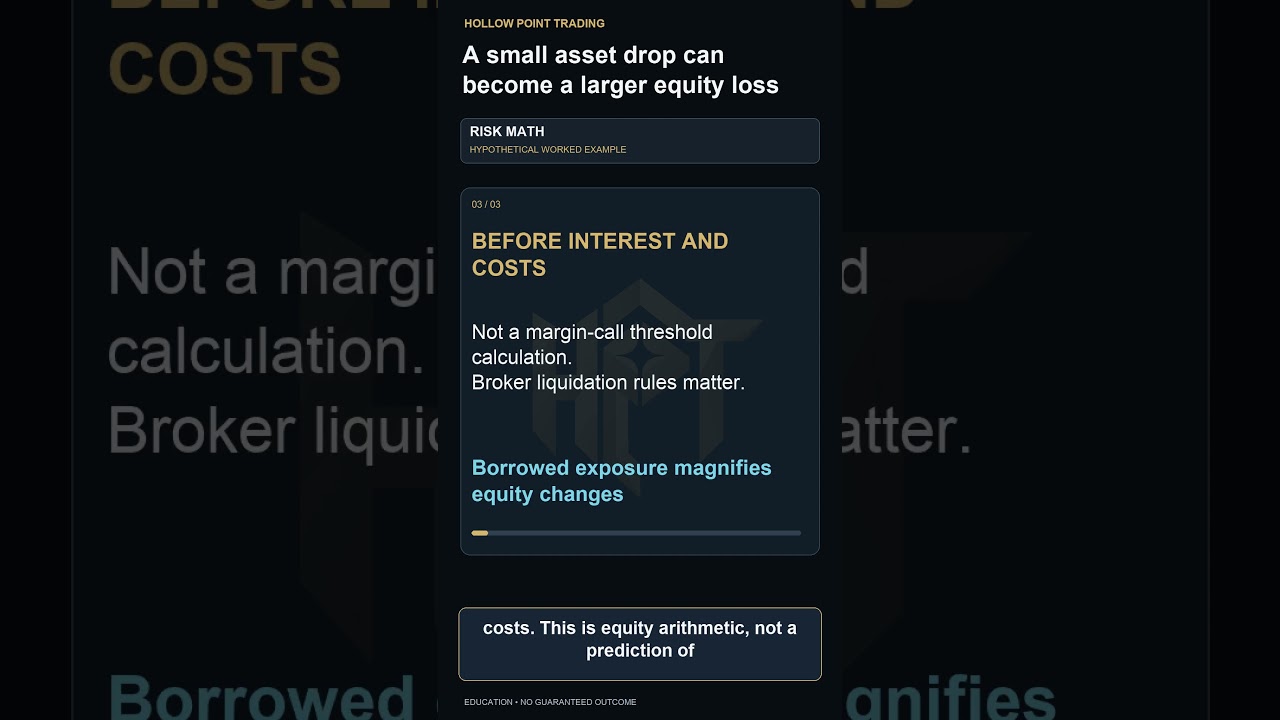
A small asset drop can become a larger equity loss #Shorts


A ten percent stock decline can reduce your own account equity by much more. Imagine buying ten thousand dollars of stock using five thousand dollars of your cash and five thousand borrowed dollars. Starting equity is five thousand dollars. Now the stock value falls to nine thousand dollars. The five thousand dollar loan has not disappeared. Sub...

How a 10% Stock Drop Can Cut Equity by More

Zero-Coupon Bonds: How Returns Work

https://youtu.be/5ahp8eHoS-g

Zero coupon does not mean zero return #Shorts


Zero coupon does not mean zero potential return. Imagine paying nine hundred dollars for a bond that promises one thousand dollars at maturity two years later. It makes no periodic coupon payments during those two years. If the issuer pays as promised, the difference is one hundred dollars before taxes and costs. Relative to the nine hundred dol...

Zero-Coupon Bonds: How Returns Work

Fund Distributions Don’t Create Extra Wealth

https://youtu.be/-Q5rcQ2z-HE

A fund distribution is not free extra account value #Shorts


A fund payout does not automatically create extra wealth. Imagine owning one hundred mutual fund shares at a twenty dollar net asset value. Your holding is worth two thousand dollars before a distribution. Assume the fund distributes one dollar per share in cash and nothing else changes. Net asset value falls to nineteen dollars. You now have ni...

Fund Distributions Don’t Create Extra Wealth

Callable Bonds: Reinvestment Risk Explained

https://youtu.be/FInRnCmrYDM

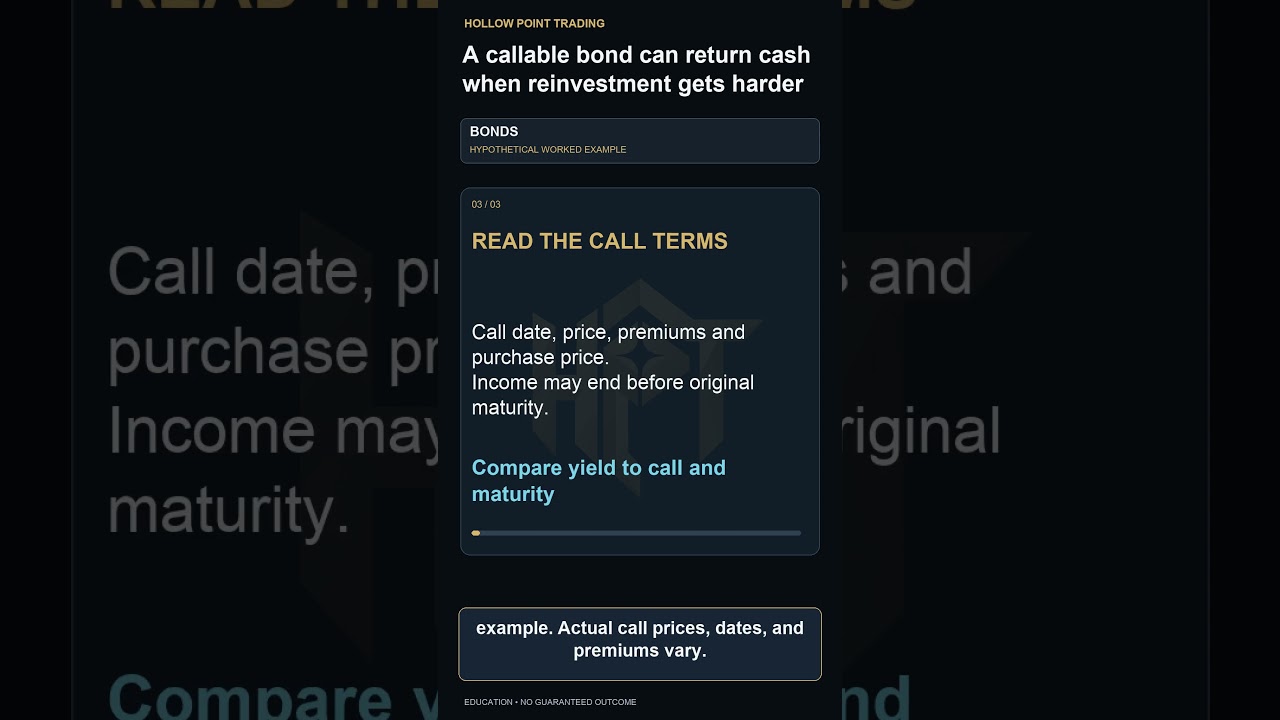
A callable bond can return cash when reinvestment gets harder #Shorts


A callable bond can return your principal just when comparable income becomes harder to find. Imagine a bond with one thousand dollars of face value pays a six percent annual coupon. That means sixty dollars of annual coupon income. Assume its terms permit a call at par and the issuer redeems it. If you reinvest that thousand dollars at four per...

Callable Bonds: Reinvestment Risk Explained