How to Build a Forever Community in Discord (Purpose, Feedback Loops, and Engagement Systems)
Summary
A “forever community” in Discord keeps growing after launch. Use give-and-take, purpose-driven content, daily check-ins, and engagement mechanics like quests and leaderboards.
Discord servers don’t have to disappear after launch. A “forever community” is one that keeps growing organically over time—because members feel purpose, feel heard, and consistently find quality interactions.
This guide turns the core ideas from Louisa’s masterclass into a practical, repeatable system for Discord community building.
What “forever community” means (and why Discord servers vanish)
In the video, a “forever community” refers to Discord servers that avoid a short lifespan after launch.
Many servers disappear for predictable reasons:
- No new members (so activity fades)
- No fresh content (so conversations get repetitive)
- The team stops actively managing the community (so nobody keeps the loop going)
The talk compares community building to a startup: if you “quit,” the community eventually fails. Sustainability depends on ongoing effort—especially when growth creates more work.
Why Discord communities fail—and what to fix first
The masterclass points to two big failure patterns:
1) Engagement drops because there’s no ongoing reason to show up
If members don’t see value in returning, they stop participating. Over time that reduces content volume and lowers interaction frequency.
2) The team stops managing the server
Even if the community starts strong, retention often collapses when moderation and community management become inconsistent.
A key takeaway: don’t treat community as a launch event. Treat it as an operating model that needs continuity.
The core model: give-and-take + purpose + quality interactions
The “forever community” approach centers on an ongoing give-and-take relationship.
Give-and-take keeps members motivated
The video emphasizes that most community managers do a lot of work on Discord. Members stay when the relationship feels balanced:
- They contribute
- They get meaningful feedback
- They feel emotionally satisfied (for example, by feeling accomplished)
Purpose prevents the “lose motivation” spiral
A major reason communities fail is that members lose purpose.
So instead of pushing people to “build a community,” the server design should connect participation to something members care about—often tied to a product, content, or expertise.
Interaction quality becomes a success metric
The talk notes that many survey responses consider “interaction quality” the way to measure success. Interaction quality matters even when you face growth pressure.
Practical implication: measure and design for the quality of conversations, not only the number of members.
Member and content strategy: small activity targets and purpose-driven updates
Forever communities aren’t built only by big campaigns. They’re sustained by predictable, small rhythms.
Use small groups to create meaningful interaction
The video highlights that even a small number of daily participants can drive a large share of community activity. It also suggests aiming for “meaningful interaction” involving about five plus or minus two people.
That means you can design for a core group of active members rather than waiting for huge spikes.
Build content around a clear purpose
The masterclass is blunt: there is no community “for the sake of community.” Content should revolve around your product, content, or expertise.
Set expectations with consistent updates
One concrete tactic: run a consistent update cadence (for example, weekly announcements about what’s been shipped and what obstacles/feedback are needed).
This gives members something to react to—and reduces the need for you to constantly invent new prompts.
Make contribution easy with dedicated spaces
To help members contribute without extra prompting, the video recommends setting up Discord areas like forums for feedback.
When feedback collection is clear and immediate, participation becomes frictionless.
Design contribution paths: volunteer roles, events, recognition, and clear processes
Members often know how to chat—but not how to meaningfully contribute to community operations.
So the server needs structured contribution paths.
Invite contributions that feel tangible
For non-commercial communities, the talk recommends letting members host events themselves so participation feels real and visible.
Provide processes, not just open-ended requests
A core point: “nobody ask—what can I do in the community to contribute other than being a mod.”
Instead, define what contributions look like, then structure channels and server actions around those behaviors.
Use examples of volunteer roles and community functions
The masterclass references concrete types of contribution pathways, such as:
- Volunteer event hosting (e.g., watch parties)
- Review programs and senior reviewer paths
- Voting roles, time-zone hosting, and spotlight roles in themed servers
Recognize participation consistently
Recognition helps members keep contributing.
The video mentions ongoing reinforcement like shout-out channels and regular announcements, plus longer-form recognition through events such as monthly workshops.
Retention systems: daily check-ins and fast feedback loops
One of the most actionable parts of the masterclass is the feedback workflow.
Do a daily Discord check-in
The recommendation is to check in daily (often in the afternoon) to review:
- feedback
- help requests
- suggestions
The goal is to keep the community’s feedback loop alive as an ongoing process, not a one-time response.
Focus your moderation time where it matters
When moderation resources are limited, the talk suggests focusing on genuinely interested members who provide useful product feedback.
Turn feedback into action quickly
A retention driver described in the video is being heard and feeling accomplished.
That requires acting fast when possible:
- Respond to members kindly, even when ideas seem ridiculous
- Implement changes where you can
- Make sure members can see their input leading to real outcomes
Personal connection and stakeholder relationships
Forever communities aren’t only systems—they’re relationships.
The most important reason people stick around is personal
The talk states that the strongest reason is that the community feels personal.
This applies whether the community is commercial or volunteer.
Help members find “stakeholders”
The video describes stakeholders as people who believe in the creator/team and root for what they’re doing.
These relationships provide emotional support, which strengthens retention.
Status and motivation come from roles
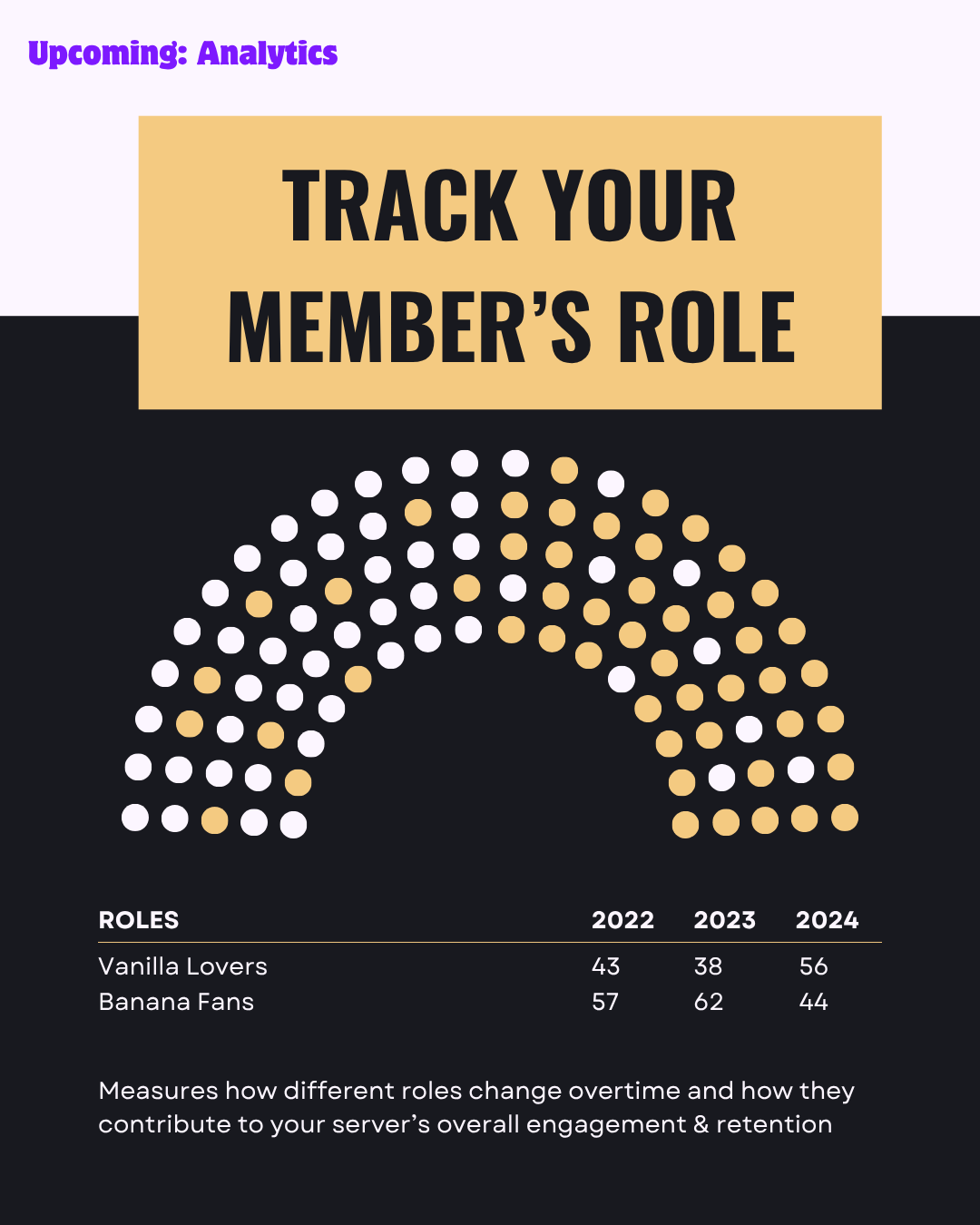
Community roles (including moderators and “hype engine” style members) create special status and motivation.
Over time, repeated roles and recognition can lead to friendly competition and deeper bonds.
Build engagement with feedback, fun challenges, quests, and leaderboards
Once you have purpose and feedback loops, you can add engagement mechanics to convert participation into momentum.
Use fun challenges that create emotional support
The masterclass frames “emotional support” as helping members feel accomplished and engaged through fun activities.
It recommends designing activities that align with what members naturally want to do when they join.
Examples mentioned include weekly progress challenges and voice-chat sessions focused on specific learning topics.
Leverage feedback mechanisms that invite conversation
The video suggests treating feedback as the start of a conversation, not a one-time exchange.
It also recommends tools/structures like forums with tags and resolution status, or a suggestion feature (the talk references Carbot as an example).
Add measurable engagement loops: quests, leaderboards, and role incentives
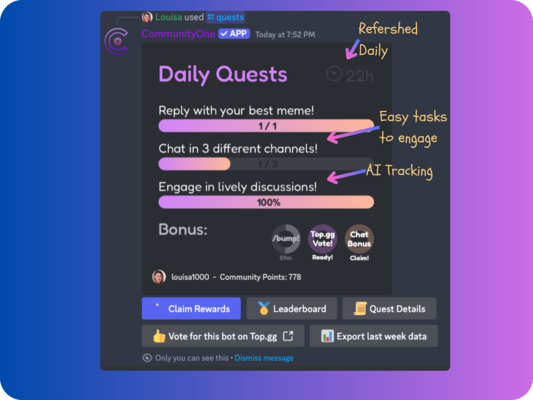
To make engagement predictable, the masterclass recommends using quest and leaderboard mechanics.
The video references internal “Hype Engine” data to show how daily engagement can be driven by quest features, especially after members have been active for a while.
Key mechanics highlighted include:
- Quests that encourage daily participation
- Leaderboards that motivate members to compete (including “being number one”)
- Special roles that earn status, such as role details that members care about (including role color)
- Hall-of-fame style recognition features
Competition can work particularly well in close-knit communities because it pushes motivated members to contribute more.
Conclusion: run your Discord like a forever system
A forever Discord community is built by design, not luck. Focus on:
- Purpose-driven participation (members don’t lose motivation)
- Give-and-take and quality interactions (interaction quality as a success metric)
- Fast feedback loops and daily check-ins (being heard)
- Clear contribution paths (members know how to help)
- Engagement mechanics like challenges, quests, and leaderboards (emotional momentum and progress)
If you want long-term retention, treat your community like an ongoing operation—because the people will only stay when the system keeps working.