Discord can be an excellent platform for scalable community support—but only if you design it for visibility, participation, and continuous improvement.
A key takeaway: “ticket tool” is often the lowest-hanging fruit. If you rely too heavily on private tickets, you can reduce public discussion and drain valuable traffic from your general channels.
Why “ticket-only” Discord support limits community growth
Ticket systems feel efficient because they move conversations into a controlled place. But the speaker’s first rule is to think twice before you go “ticket-only.”
The problem is traffic and visibility. When you route questions away from general chat into private tickets, you’re effectively driving really good traffic away from where other members can benefit. That leads to fewer public discussions and more issues handled privately.
In other words, a ticket system can answer questions, but it can also reduce the broader community value of Discord—where people learn together, watch staff and helpers solve problems, and build social participation.
Public answers: support that keeps conversations in the open
The transcript frames Discord support as having two goals:
1) Get questions answered (often by other members and/or staff)
2) Help members transition from “help-needed” to social participation
To do that, place knowledge where new members can find it. The speaker highlights an important behavior: when people first join a Discord, the first thing they do is search the server.
So instead of hiding answers behind private flows, use “public-first” support:
- Put accurate, helpful information where it’s easy to find through Discord search
- Support members publicly, so others can learn from the exchange
- Treat public guidance as part of onboarding and community engagement
A practical implication from the transcript: smaller communities can get flooded with requests for moderation roles. In that case, set clear guidance about what you’ll consider publicly and what boundaries to follow, so you don’t accidentally create an intake channel that drains community channels.
Add AI for public support (and know when to escalate)
AI can be used to provide public support in a way that matches Discord’s strengths: knowledge discovery and open answers.
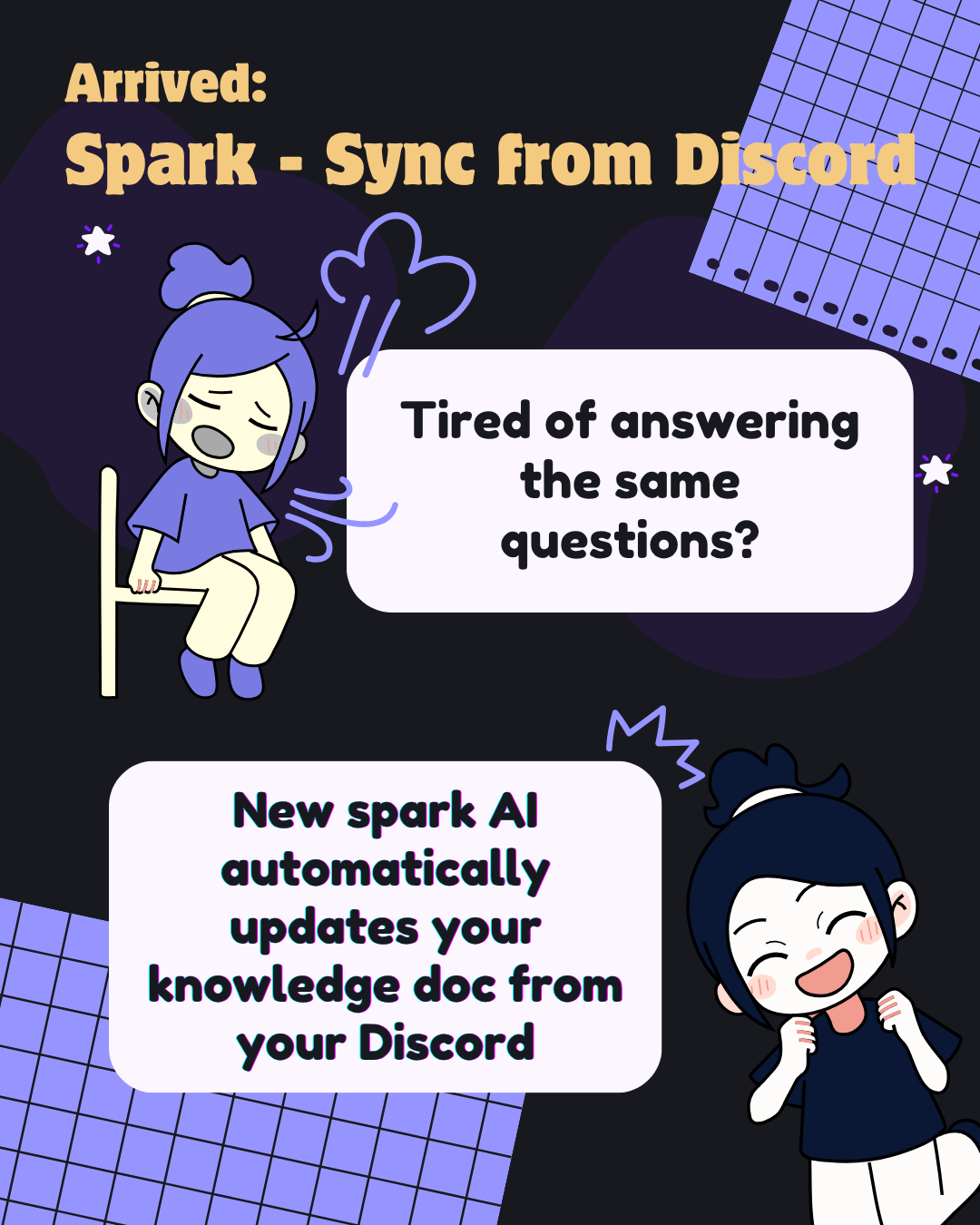
The transcript specifically mentions an approach like “Spark,” where the feature automatically reads your documentation and answers member questions.
How to think about AI adoption
The speaker describes a realistic pattern:
- About 10–25% of users may prefer talking to AI first before talking to a human (often to avoid embarrassment and to get faster answers)
- Only a small fraction may always use AI, but many users will transition from AI reliance into broader community support
So AI isn’t a replacement for community—it’s a bridge that can lower friction and increase speed.
Use a “human loop” when AI can’t solve repeated questions
AI should not trap users in an endless automated loop. The transcript emphasizes a smart escalation rule:
- If a question repeats and AI can’t answer it, move the conversation from the AI loop to the human loop
This escalation matters because repeated unanswered questions point to missing documentation, unclear onboarding, or a gap in how your product/community supports the user.
Review AI support daily to improve what users need
To keep AI support useful over time, the speaker recommends reviewing AI support channel questions daily. The goal is not just to answer—it’s to learn what people are confused about and use that feedback to improve.
Choosing Discord ticket bots for scaling and reliability
If you do use tickets, reliability matters—especially as volume grows.
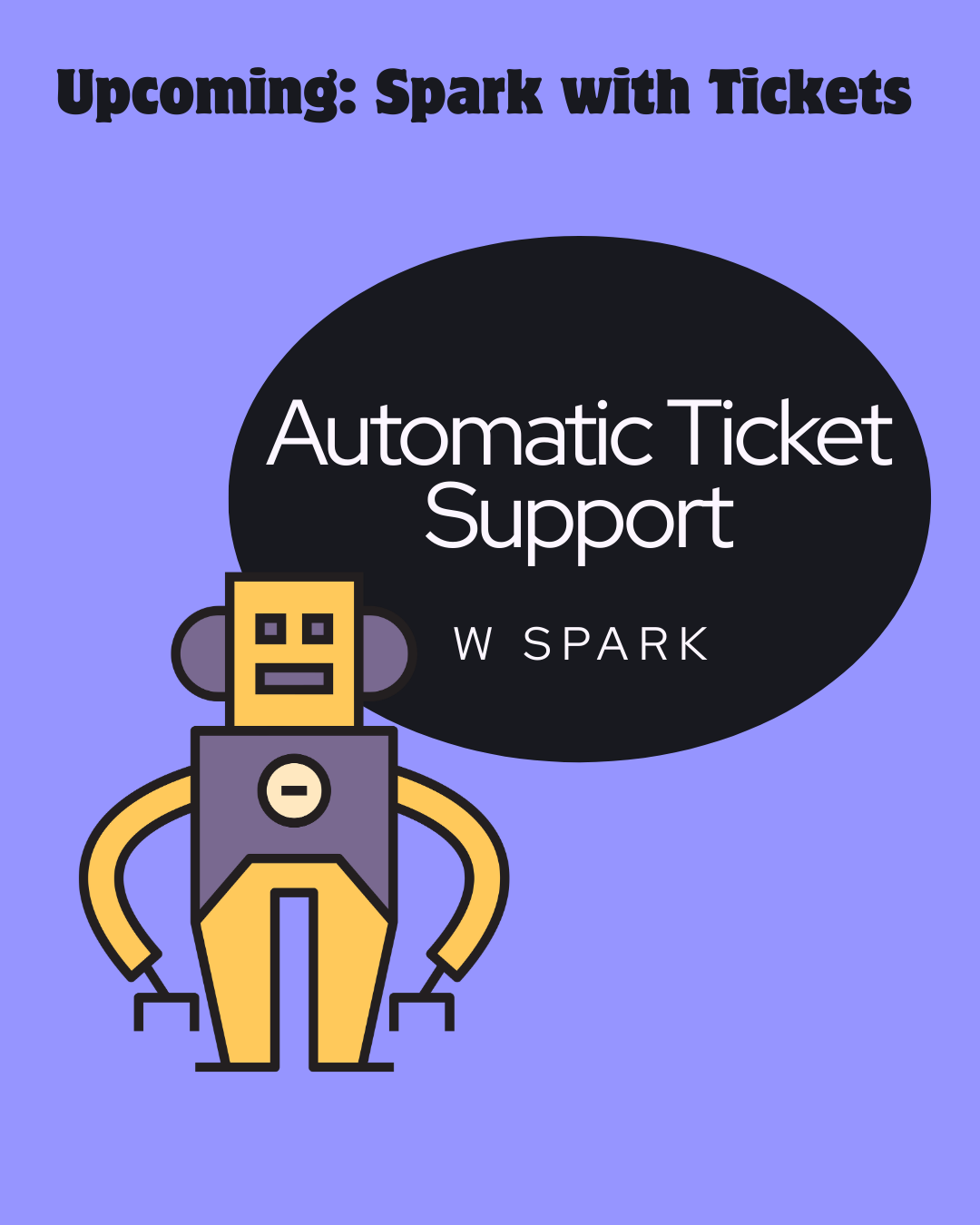
The transcript notes that ticket systems can struggle with high ticket volume, and some bots support rules like limiting growth over time (for example, how many private threads are allowed per category).
What to prioritize
When selecting a Discord ticket bot for scaling:
- Choose for reliability over huge volume
- Confirm the flow is easy for users and for your team
- Ensure it supports the way your moderators want to manage and close tickets
Ticket King (simple, fast flow)
The speaker recommends Ticket King as a tool that is easy to set up and widely used. The described flow is straightforward:
- Users click
- Ask a question
- A moderator answers
- The ticket is closed
Ticketly (dashboard-focused moderation)
The transcript also recommends Ticketly, especially if your team prefers a dashboard-style moderation workflow. It’s described as including:
- Category customization
- Auto-reminders for unclosed tickets
- Automatic closing
The broader point is not which bot is best for every server, but that you should choose the one that works reliably for your support volume and moderation workflow.
Support tools beyond tickets: logging, specialized bots, and forums/threads
Ticketing is only one support mechanism. The transcript highlights several other approaches that can produce higher-quality support and clearer feedback.
Logging (often more powerful than tickets)
The speaker suggests logging can be more powerful than ticketing, though it may be paid.
If your goal is to learn what’s happening (not just respond), logging can help you capture patterns and evidence over time.
Specialized feedback bots
The transcript mentions specialized tools depending on community goals, including:
- Submitti for developer-focused technical feedback with GitHub integration
- Beta Hub for capturing feature-specific feedback during indie alpha/beta testing
Discord Threads/Forums (a native, underrated option)
Discord’s native Threads and Forums are described as an underrated alternative.
The benefit described in the transcript is conversation quality:
- Better discussion due to the effort required to create clear titles and content
- Less spam because it takes more effort to post well
This aligns with the earlier “public-first” principle: when support is organized in open spaces, community learning improves.
Encourage feedback with consistent tracking
Tools don’t guarantee feedback. The transcript is explicit that giving feedback isn’t naturally instinctive for many people.
So instead of relying on users to spontaneously provide high-quality feedback, you should make feedback collection learnable and structured.
Key practices from the transcript:
- Track all feedback and bug fixes consistently so users can see their input was received
- Use tags or structured responses (the transcript gives “yes/no/maybe” as an example)
- Follow up rather than simply replying permanently with “no”
- After each piece of feedback, provide a response (even if you don’t accept the suggestion)
This is how you reduce churn in the feedback loop: users learn that participation leads to outcomes or at least clear reasoning.
Reward feedback and apply the 80/20 rule
The transcript also recommends incentive design.
Use low-effort improvements as visible “wins”
Show users you noticed their needs with quick, low-effort updates—such as changing a setting or button. These are easy wins that users appreciate.
Focus on the 20% who generate most feedback
The speaker applies an 80/20 approach:
- It’s not just about getting more people to respond
- It’s about cultivating the smaller group (about 20% of users) who will generate most of the feedback
Reward generously, especially early
The transcript emphasizes rewarding users generously when it’s their first time giving feedback, and structuring incentives so helpful feedback feels more valuable than routine tasks.
Track feedback over time (and handle staff changes)
If you’re building a support system, you need continuity.
The transcript notes that if your organization is changing frequently (such as community managers changing), tracking becomes even more important. Without tracking, older community insights can be missed when staff transitions.
This also matters when developers don’t naturally participate on Discord. A stronger bridge is required so PMs and product teams receive the insights from community discussions.
Synthesize Discord feedback so your team actually acts on it
Discord conversations can be “messy,” mixing valuable signals with less useful messages.
The speaker recommends a synthesis workflow:
- Have the person closest to Discord (and the consumer market) review the feedback
- Create a synthesized summary for the team
Rather than focusing on raw counts (like “five people out of 100,000”), the transcript recommends persuasive summaries built around user intent and outcomes.
A useful structure described in the transcript:
- Provide a high-level summary
- Include context and user stories so the team empathizes with feelings and blocked outcomes
This helps turn community discussion into decisions.
Conclusion: build support for visibility, escalation, and learning
Best Discord support isn’t just answering tickets. It’s designing for:
- Public-first visibility (so answers are findable and community learning stays in the open)
- Smart AI support with human escalation when AI can’t solve repeated questions
- Reliable ticket tooling only when needed (prioritizing reliability at volume)
- Logging, forums/threads, and specialized feedback capture beyond tickets
- A repeatable feedback loop: encourage, reward, track over time, then synthesize so your team acts
If you set up support this way, Discord becomes more than a helpdesk—it becomes a continuous improvement channel for both your community and your product.